Method
Five steps. Bounded, documented, repeatable.
Cloaking defeats crawlers. It cannot defeat an actual paying customer, because the operator has to reveal the true money gate in order to take the money.
Step 01
Target
A priority list built from proactive targeting and a structured tip channel open to members, associations and the public. Targeting is driven by exposure rather than by notoriety: a merchant carried on a rail that also serves a hundred other shells is worth more to attribute than a single loud brand with nothing shared behind it.
Tips arrive through a structured intake so a claim can be triaged against what we can actually test. A tip that names an institution is not evidence and does not enter the collection queue as one. The list is re-ranked continuously.
Specimen — illustrative structure only. Not a finding.
- #T-000DEOnline casino14 shells2026-07-21
- #T-001ESOnline casino9 shells2026-07-19
- #T-002BRSports betting6 shells2026-07-17
- #T-003FROnline casino4 shells—
- #T-004MXSports betting3 shells—
Step 02
Onboard as a real customer
Native-language entry through the affiliate funnel, correct geography and device signature, plausible deposit history. The card rail is frequently not offered at all to traffic arriving from organic search; it appears for a customer who looks like the customer the operator paid to acquire. Auditors get served the decoy.
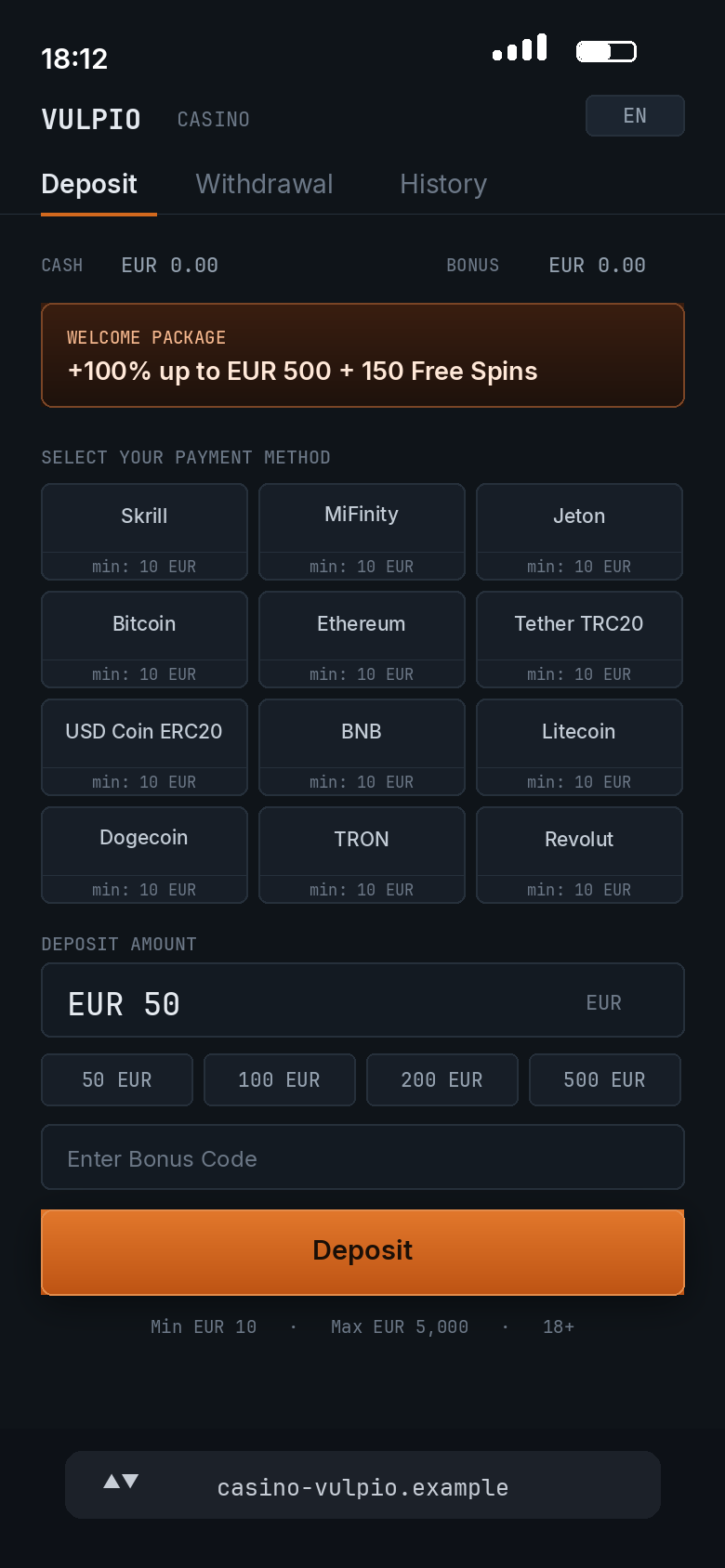
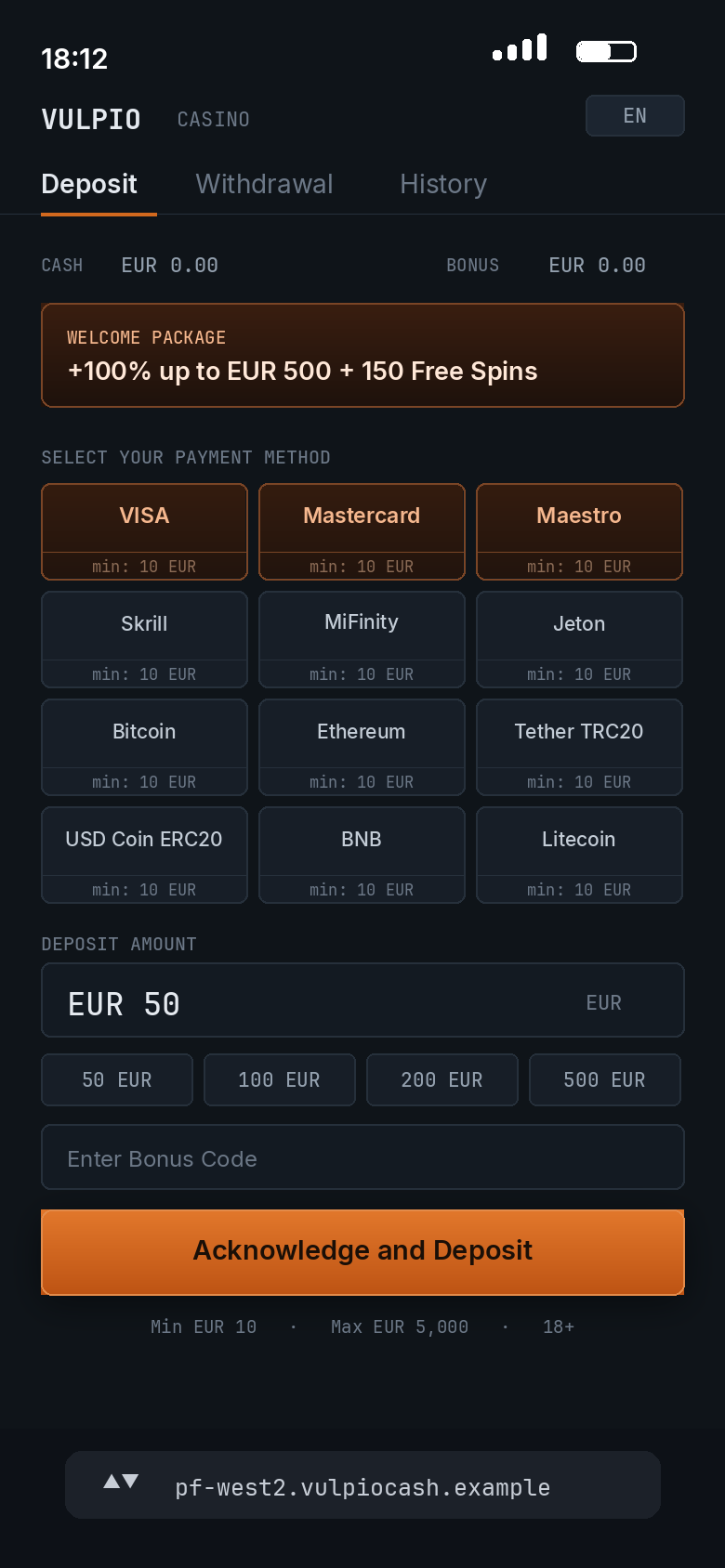
Same site. Same minute. Two different cashiers.
Step 03
Pay, capped and documented
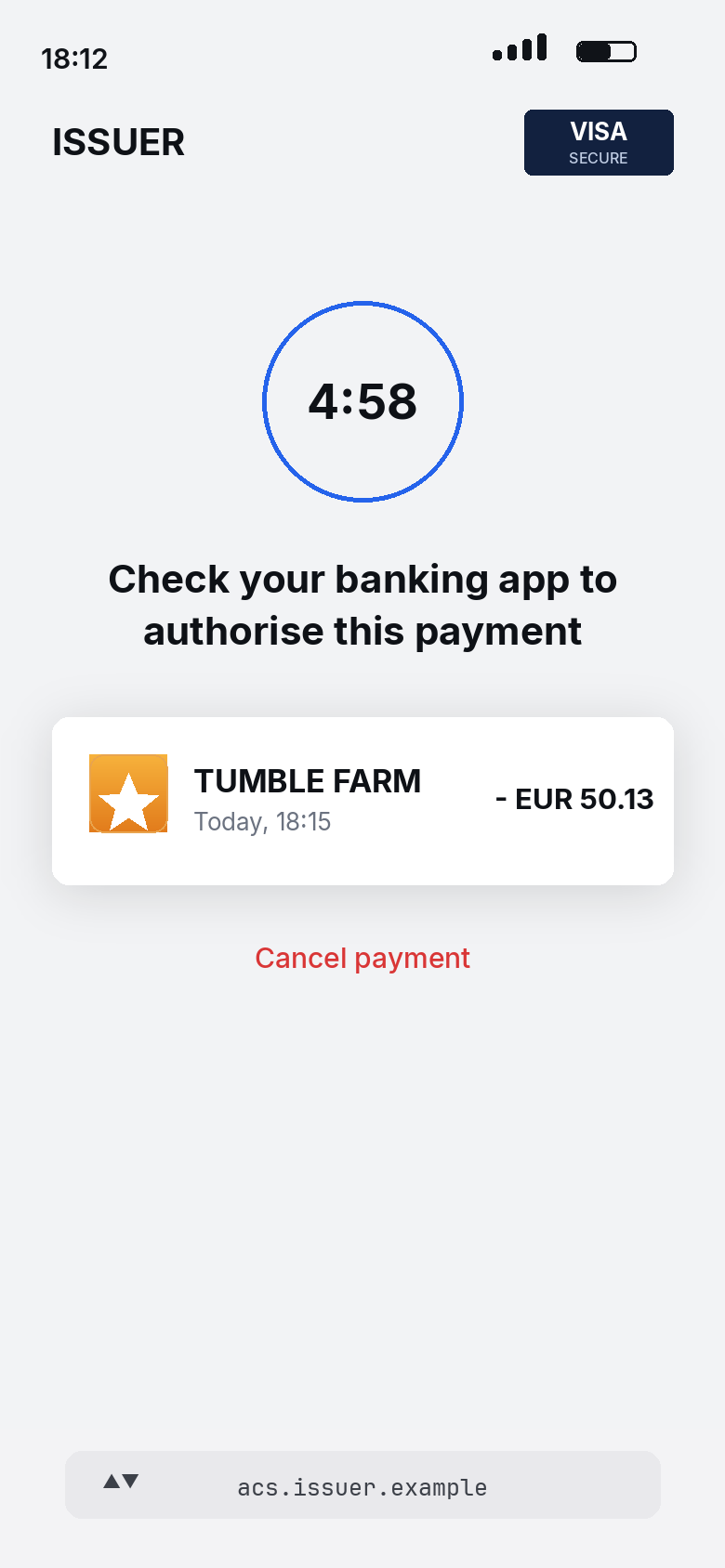
A small real payment under a pre-set cap, set at the minimum value that reliably clears the operator's cashier. The payment exists to produce an authorisation record, not a position. No profit is taken from winnings.
Every transaction carries a full audit trail: the funnel it entered by, the timestamps, the cashier state at the moment of payment, and the authorisation and settlement records returned afterwards.
Step 04
Trace the settlement path
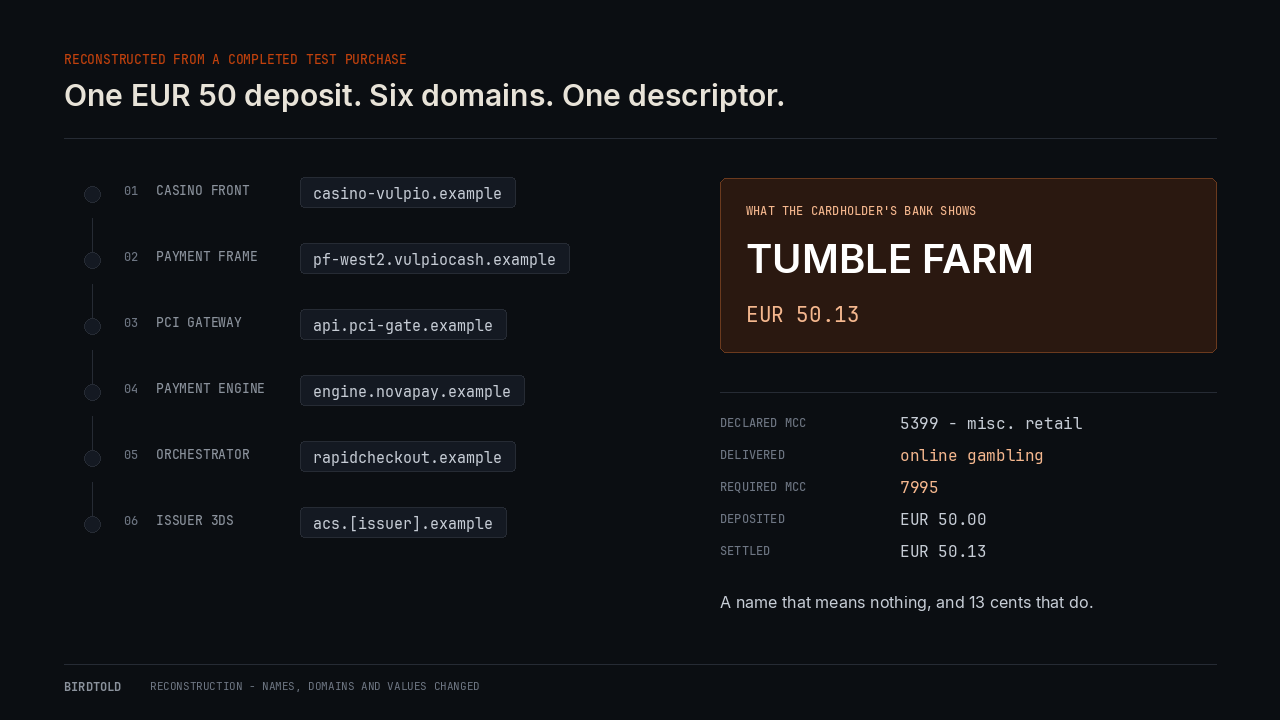
The acquiring BIN is the durable fact. A shell can change its name, its descriptor and its storefront overnight; changing the institution that acquires for it is slow, expensive and visible.
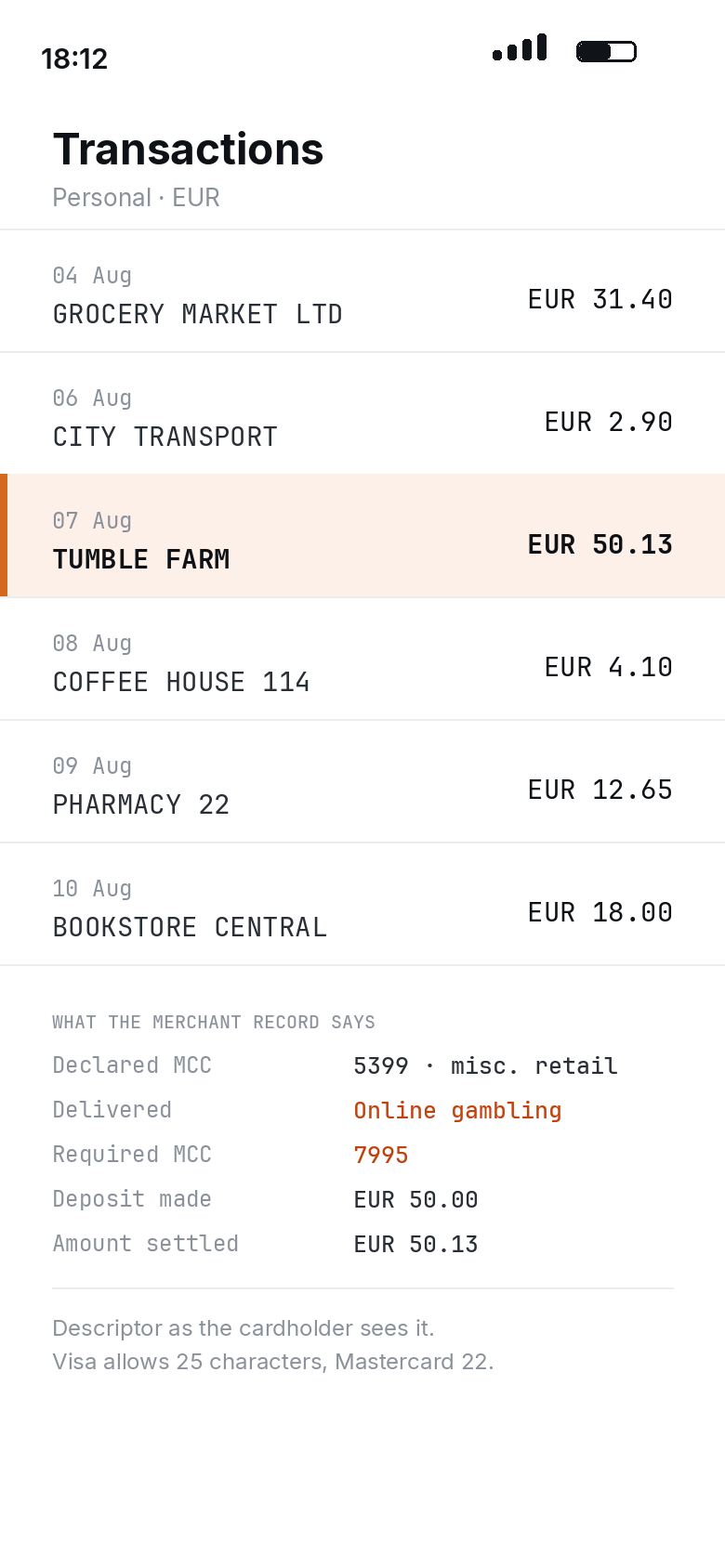
The descriptor as it lands is captured verbatim, and the orchestrator in the middle and the settlement route are reconstructed from the record. This is where a declared MCC is tested against the service actually delivered.
Before acquiring Transactions or Gaming Payment Transactions reflecting non-face-to-face gambling, an Acquirer must: Register the Merchant, Sponsored Merchant, or other entity with Mastercard … and Obtain and retain from each governmental licensing authority … a copy of its license to conduct the gambling activity for each applicable jurisdiction.
Correct coding triggers a registration that requires a licence. That is what the miscoding is for.
Step 05
Package to evidentiary standard
Chain of custody on every artefact, timestamped and reproducible, formatted for compliance-programme intake. Every named party receives a right of reply before a finding is filed, and the reply travels with the finding.
Evidence pack BT-2026-0417
1 field withheld on this page — disclosed inside the pack to the party entitled to receive it.
Every item, hashed and logged
| Artefact | SHA-256 | Collected | Handling log |
|---|---|---|---|
| Funnel capture — affiliate landing | 9f2c41a8d7be05c3169a4f0b8d2e77c15ab3906e4d81f2c7b05ae639d4c81b72 | 2026-07-17T14:22:08Z | 4 entries |
| Cashier state — card rail offered | 3d7b0e59c1284af6903de5b7712c48ab6f0d93e2185cb47a0e6f31d9c25a8046 | 2026-07-17T14:26:41Z | 4 entries |
| Payment confirmation | c81a4e07f2593bd6104c7ae8f39b02d517864cb0293fae7d15b6083c4a9d2e61 | 2026-07-17T14:29:03Z | 5 entries |
| 3-D Secure prompt, descriptor visible | 5b60d92fa4137ce8027b1c6d4930e8fa71c25b038d6ea947f13c0b285ae91d64 | 2026-07-17T14:29:22Z | 5 entries |
| Authorisation record | 0a4f6b81de2937c5041b8ea62c7d05938fb14a70c62d8e39145bf07a2d6c9e83 | 2026-07-17T14:29:26Z | 6 entries |
| Settlement record | 7e1c093b8a5d24f6015ba9c30e7d248fb63019ca5d82e47b190cf6a83b24d705 | 2026-07-20T06:11:52Z | 3 entries |
6 artefacts listed · 27 handling entries across the pack.
Engagements
Three ways to commission the work
- Commissioned investigation
- You name the operators, the merchant portfolio or the market. We return forensic dossiers with chain of custody on every artefact. Scoped and priced per engagement.
- Continuous coverage
- Collection across a market or vertical, refreshed as operators rotate shells and descriptors. Delivered as a screening list, with API access on engagement, and dossiers on attach.
- Coalition programme
- Members of an association or a group of licensed operators fund a single programme and share the evidence pool. Shared cost, shared findings.